
Although France and Canada attract many students from the region every year, many see their projects hampered by obstacles that are nevertheless avoidable.
This guide brings together the mistakes not to make, concrete tips and a complete checklist to approach your mobility with complete peace of mind.
The 10 mistakes to avoid
1. Starting the process too late
Admissions, Campus France, visa applications, accommodation search and reservations take several months. Ideally start between 8 and 12 months before the start of the school year.
2. Choosing a school without doing research
Compare programs, diploma recognition, job openings, fees, city and internship opportunities.
3. Underestimate the real cost

Beyond tuition fees, plan:
- accommodation ;
- food ;
- transportation ;
- internet connection;
- computer hardware;
- insurance ;
- unforeseen expenses.
4. Prepare an incomplete file
Check several times:
- passport ;
- visa;
- letter d'admission;
- diplomas;
- transcripts;
- financial supporting documents.
Scan all your documents.
5. Neglect'travel insurance
A medical emergency or incident before you enroll in the local plan can be very expensive.
Travel insurance can, in particular, cover the medical expenses of'emergency,'assistance and repatriation according to the contract.
For students preparing to leave, Becotrac Assurances offers support in choosing travel insurance adapted to the travel project.'studies. L'objective is to'help each student understand useful guarantees rather than choosing solely on price.
6. Wait to look for accommodation
Student accommodation is quickly booked. Always check the ads to'avoid scams.
7. Ignoring the healthcare system
The rules differ between France and Canada. Find out about student health coverage and the steps to take upon your arrival.
8. Not preparing for integration
Find out about culture, transportation, cost of living and student associations.
9. Travel without digital copies
Store your documents in a secure space accessible from your phone.
10. Leaving without a backup plan
Have a financial reserve and contact details for your embassy, your establishment and your loved ones.
France or Canada: quick comparison
| Critère | France | Canada |
|---|---|---|
| Coût de la vie | Variable selon les villes | Souvent plus élevé |
| Santé | Régime selon les situations | Variable selon les provinces |
| Climat | Tempéré | Hivers souvent rigoureux |
| Emploi étudiant | Sous conditions | Sous conditions |
Checklist before departure
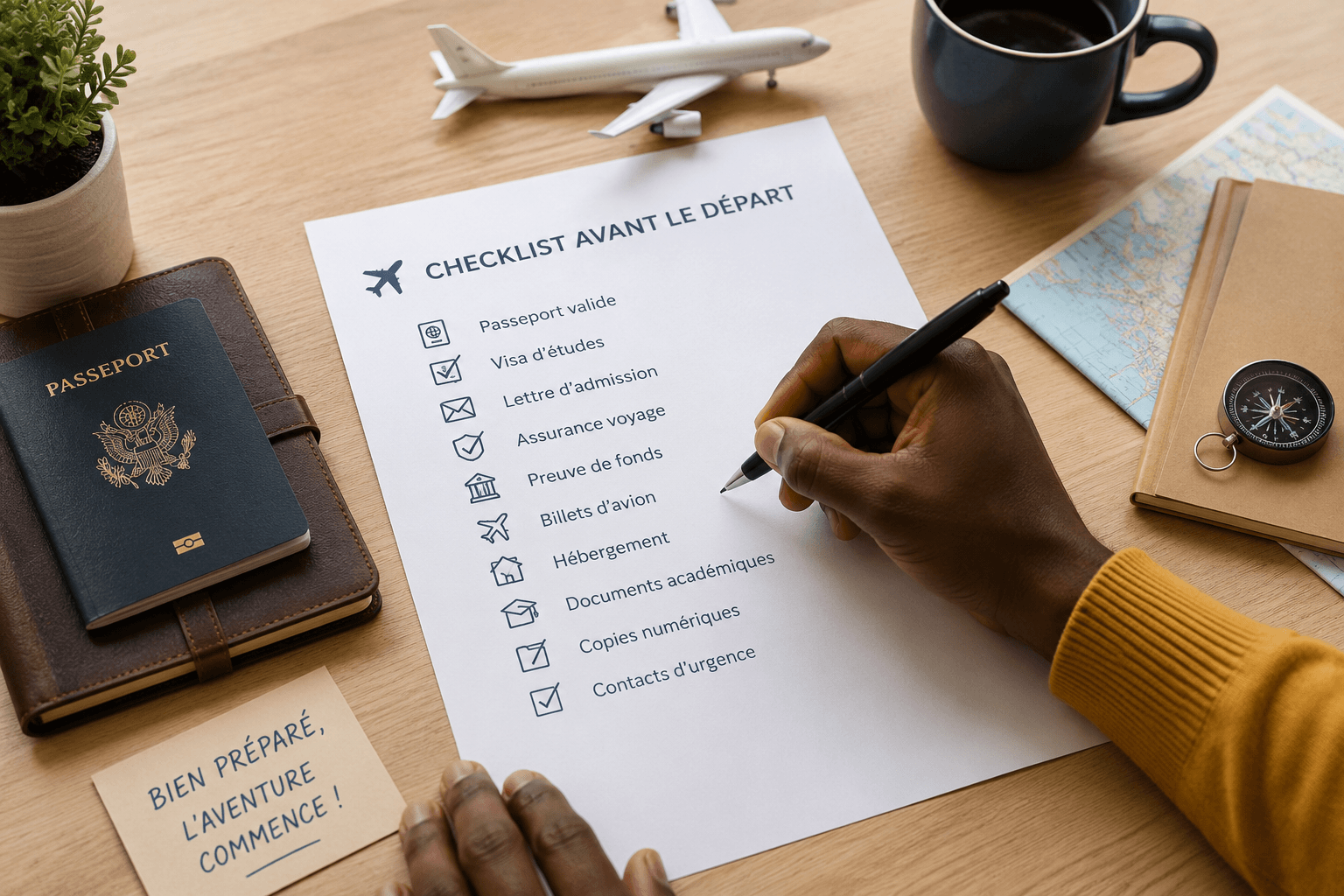
Valid passport
Visa obtained
Admission confirmed
Travel insurance
Reserved accommodation
Planned budget
Plane ticket
Copies of documents
Emergency Contacts
Frequently asked questions
When to start the process?
Is travel insurance compulsory?
Can you work while studying?
How to avoid housing scams?
What documents should you always have?
Why prepare a detailed budget?
Conclusion
A project of'studies at'foreigner prepares well before departure. By anticipating administrative procedures, the budget, housing and your health protection, you limit unforeseen events.
In this preparation, a travel insurance adapted is one of the elements that contribute to traveling more peacefully. We support students in this step to help them choose coverage corresponding to their destination.